

Petrasiunai power plant urban vision
Petrasiunai power plant urban vision
Petrašiūnai Power Plant is an important energy production site for the city of Kaunas; however, technologies are changing—processes are becoming quieter, more efficient, and more sustainable. This means that less infrastructure, fewer facilities, and smaller restricted areas are needed.
What should be done with the newly emerging space?
The urban vision for the Petrašiūnai Power Plant explores how contemporary energy technologies are changing the scale of infrastructure and opening up new opportunities for the city. More efficient energy production processes make it possible to transform part of the site into public, cultural, and recreational spaces while maintaining the active function of the power plant.
- Location
- Kaunas
- Stage
- Competition
- Purpose
- Multifunction
- Client
- AB „Kauno energija“
- Authors
- Edgaras Neniškis
- Greta Gulbinskė
- Lukas Pernaravičius
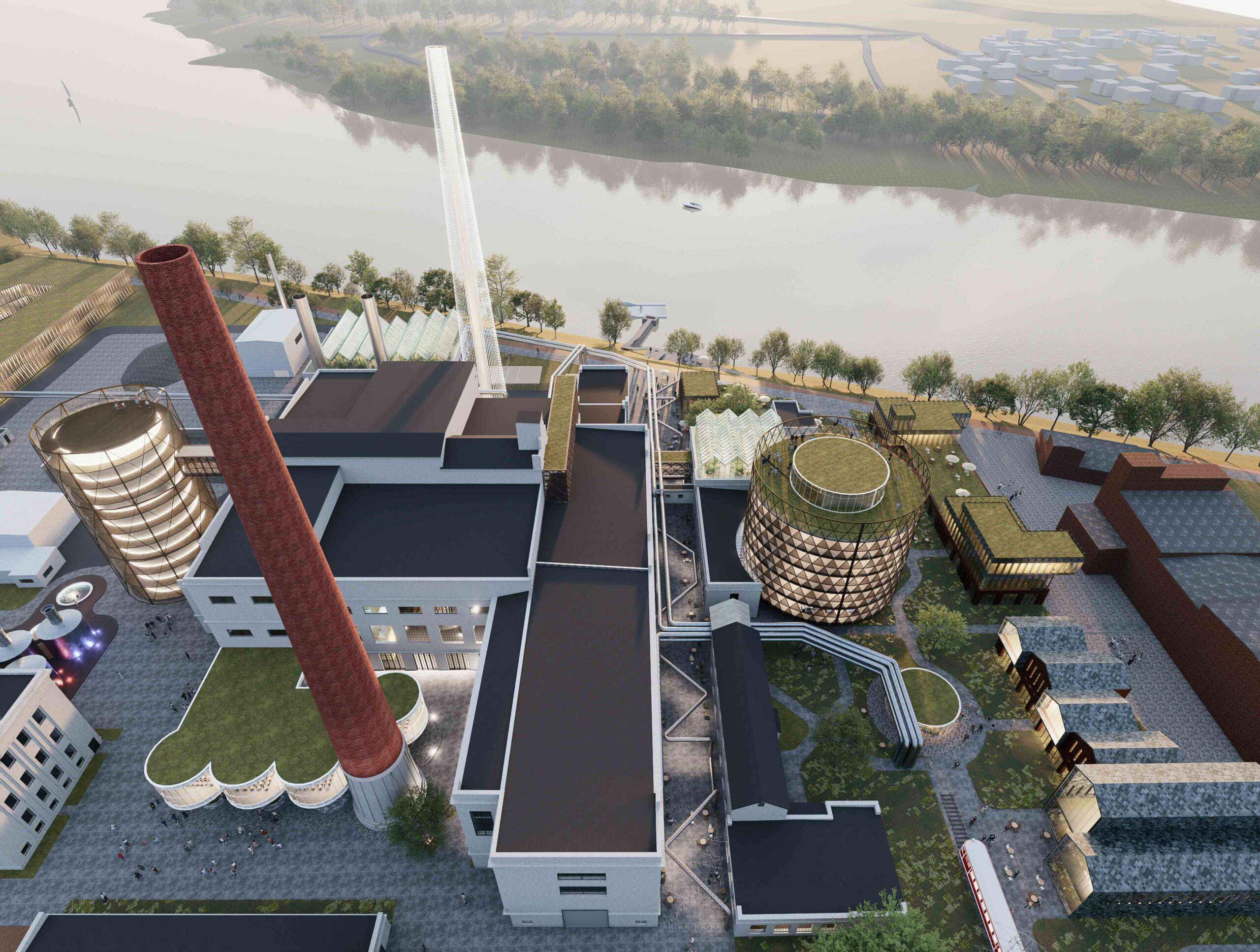
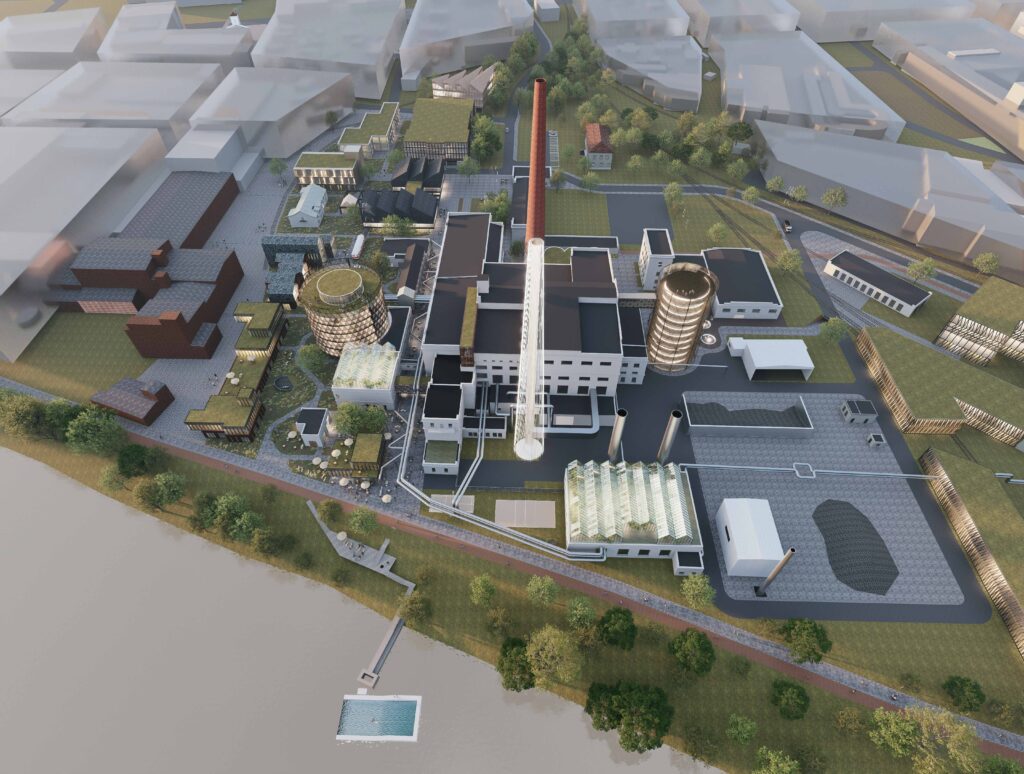
The project proposes a new coexistence between energy infrastructure and the city—where technical facilities are not isolated but integrated into the urban fabric. In this vision, the Petrašiūnai Power Plant becomes an open system that connects energy production, everyday urban life, and the Nemunas river landscape.
The historic buildings and structures of the power plant are preserved as the foundation of the site’s identity and are given new functions. Industrial heritage is interpreted not as a static object, but as an active spatial structure that adapts to the contemporary needs of the city.
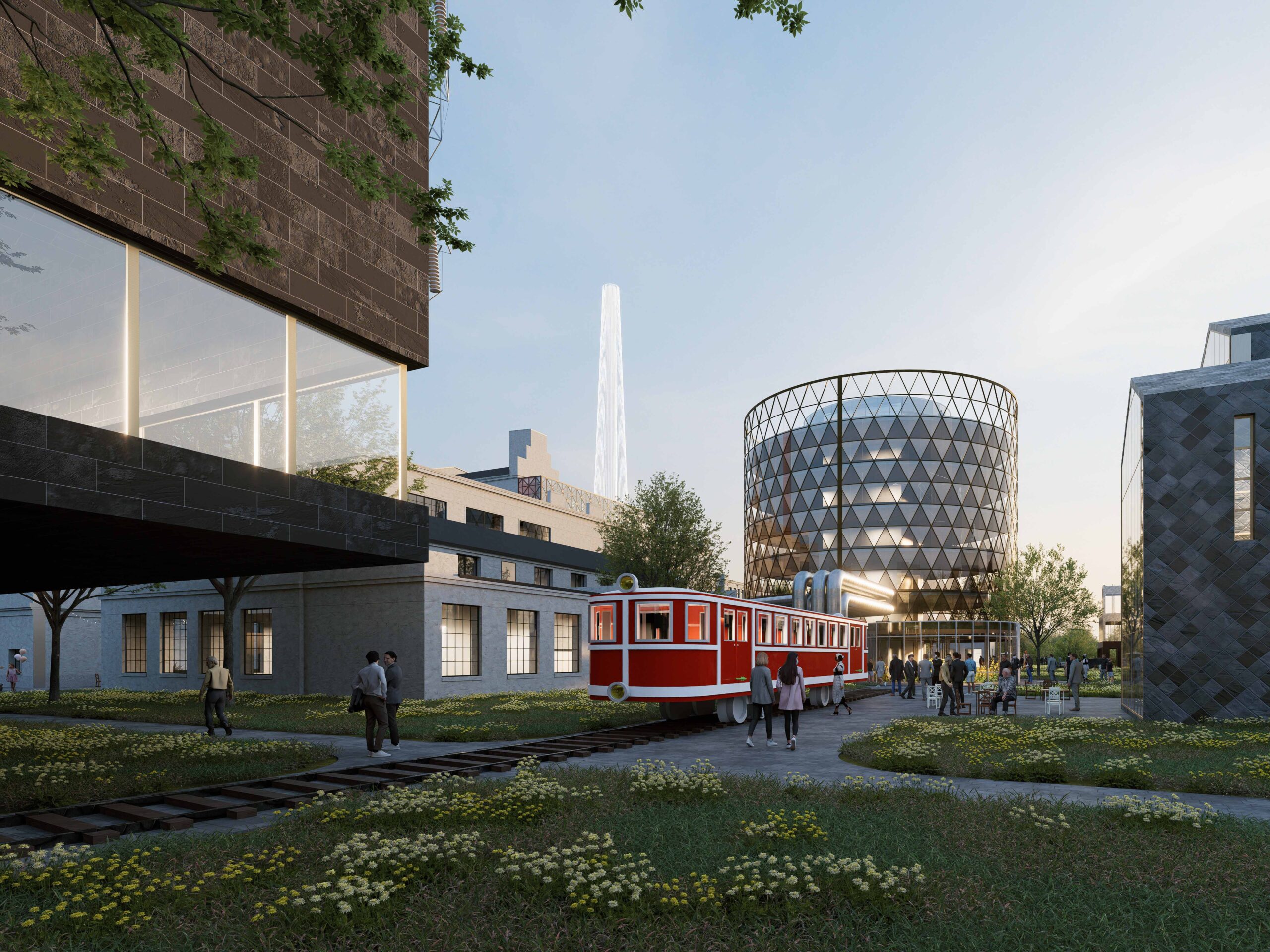
The newly emerging open land forms a coherent sequence of public spaces—squares, passages, courtyards, and the riverfront. These spaces create connections between buildings, the city, and the river, ensuring the vitality of the area at different times of day and throughout the year.
The “Energy Park” is understood as a thematic urban structure in which energy is interpreted more broadly than a purely technological process. Technical, natural, and social energy converge here, creating a new experience for the city and its residents.
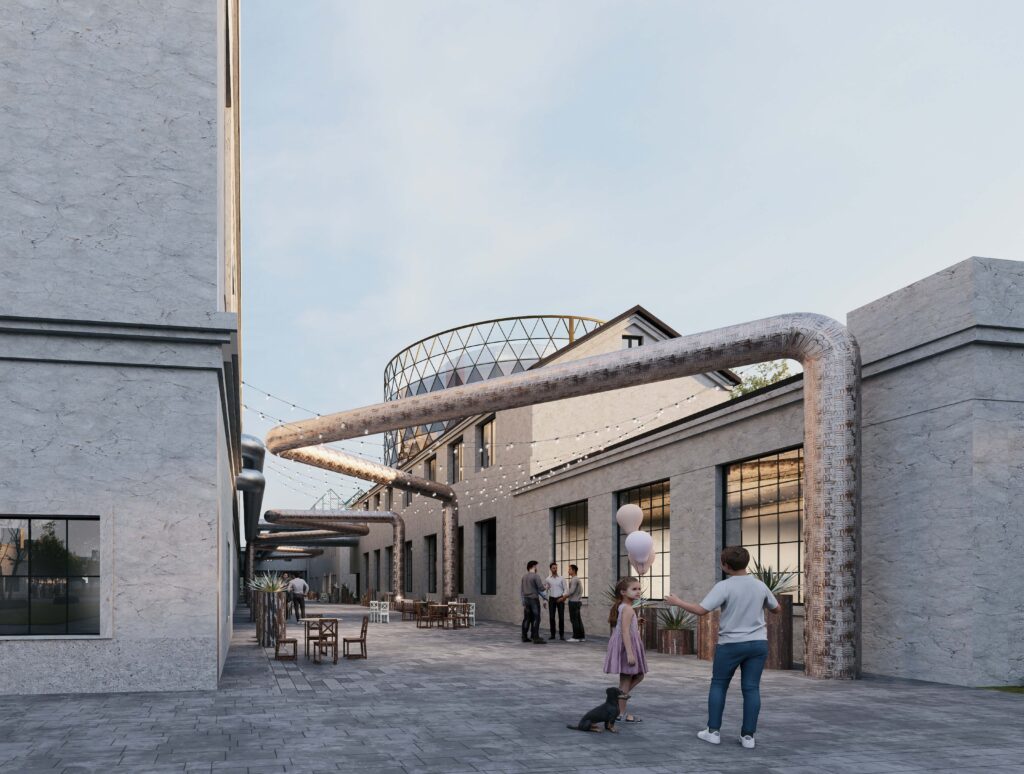
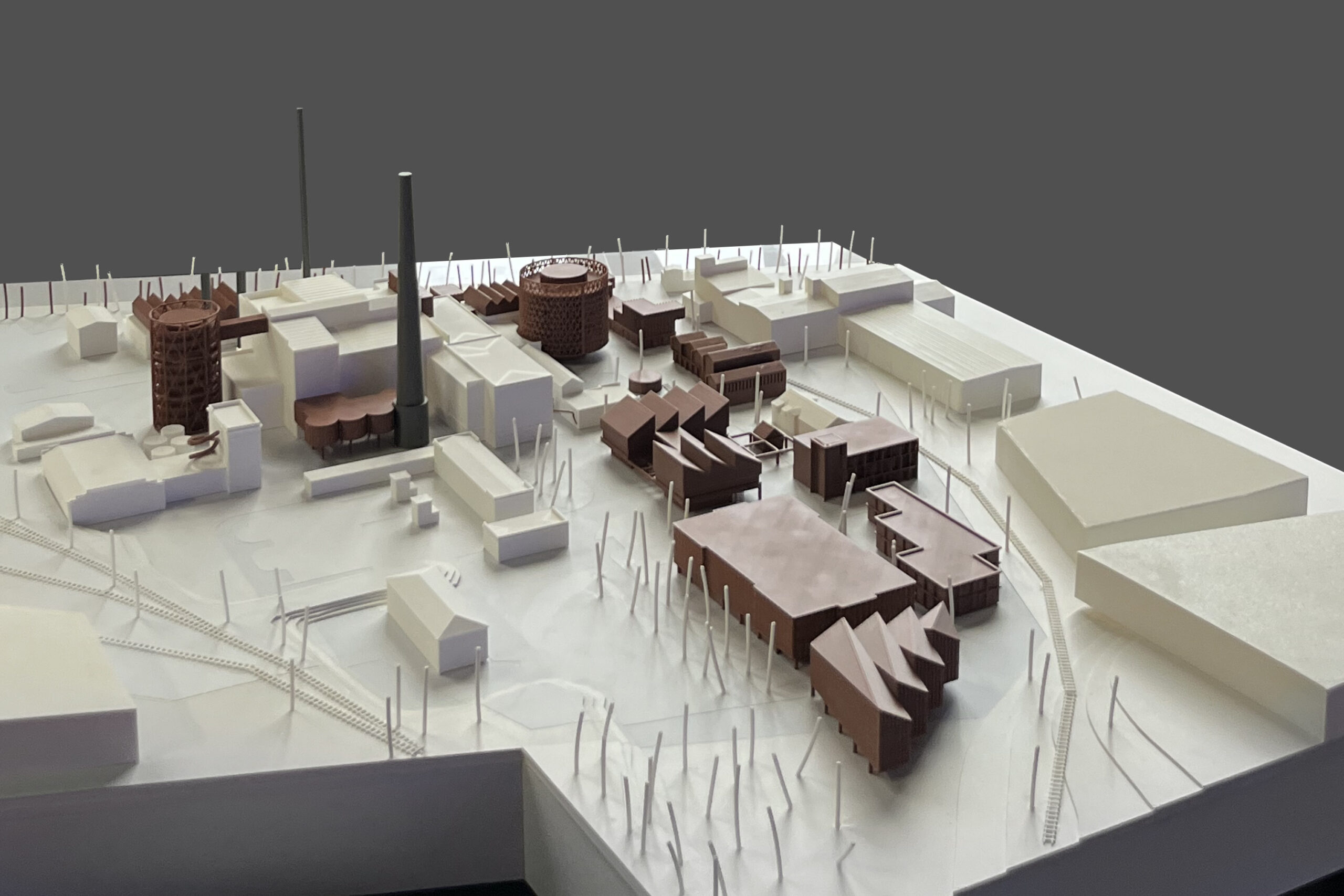
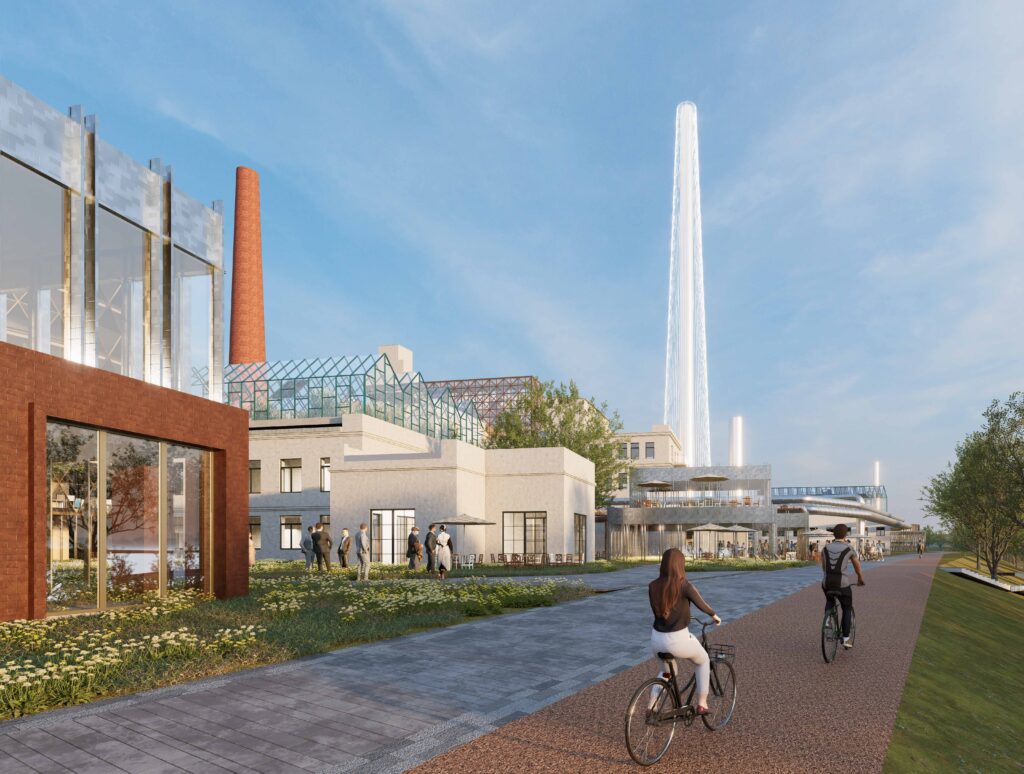
The Petrašiūnai Power Plant site is designed as a connecting link between the city center, the Panemunė forest, and the Nemunas riverfront. Urban connections and sustainable mobility solutions establish the area as an important node in the southeastern part of Kaunas.