
The Circle // Molėtai Water Education Center
The Circle // Molėtai Water Education Center
“The Circle” is a symbol of the order of the world. It is an interpretation of the Lithuanian rėdos ratas—the wheel of cosmic order—in which nature, humanity, and time merge into one.
The Water Discovery Center “The Circle” is born from this cyclical movement—of constant change, flow, and renewal. The building is not merely an object; it is a living process in which water becomes a form of architecture, and architecture becomes a reflection of water’s journey.
Here, the circle is not only a geometric shape but also a symbol of cosmic order, connecting sky and earth, past and future, silence and sound, movement and stillness. The visitor is invited on a journey that begins underground—in the depths of water—and rises upward toward light, rainbows, and rain clouds. This is a circle of discovery, reflecting humanity’s relationship with the source of life—water.
- Location
- Molėtai
- Purpose
- Educational
- Client
- Molėtai Municipality
- Authors
- Arūnas Liola
- Rolandas Liola
- Edgaras Neniškis
- Greta Gulbinskė
- Emilija Minikavičiūtė
- Jonas Rimeika
- Evelina Stankevič
- Visual
- zeroscenery
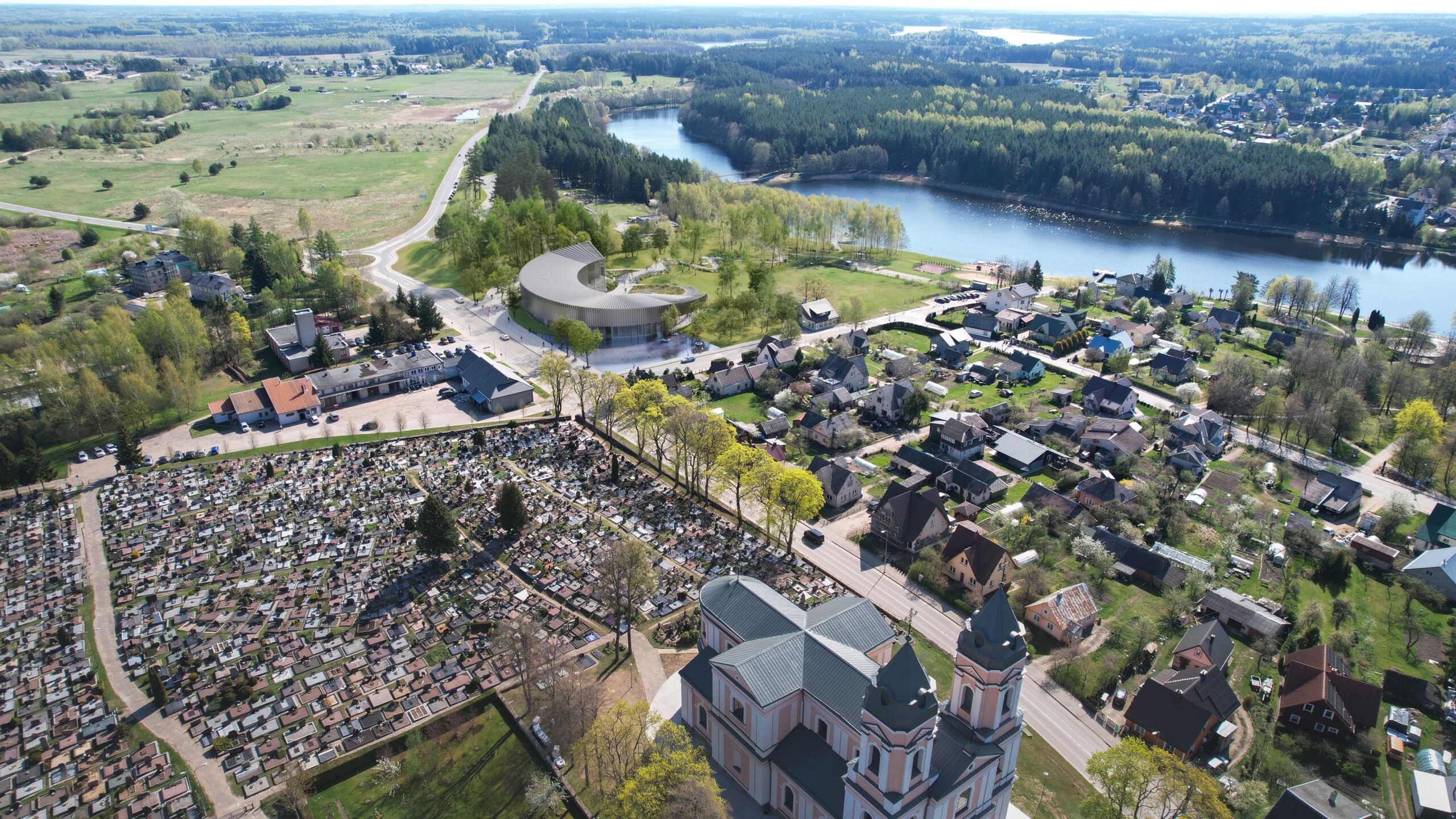
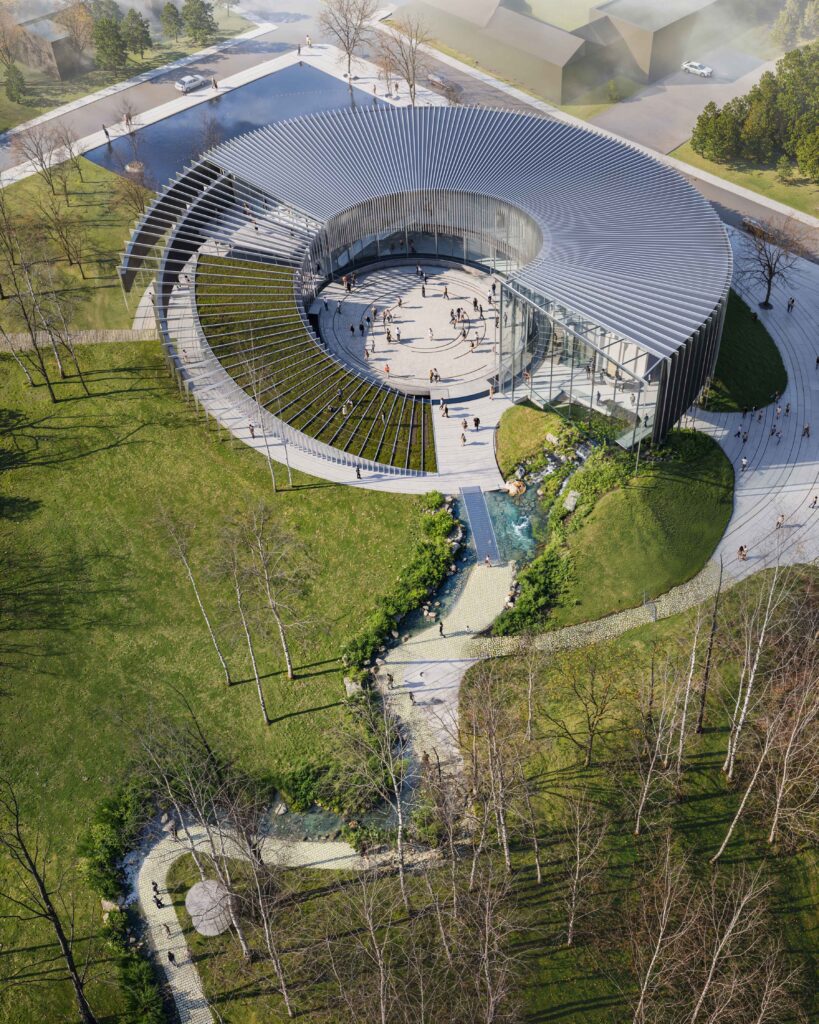
The project is seamlessly integrated into the Molėtai lake landscape—between water, rolling hills, and greenery. The building is designed in the northern part of the town, adjacent to Lake Pastovys, where its volume emerges from the natural topography like a spring bursting forth from the earth. The circular form frames an inner courtyard that becomes a place of silence, contemplation, and reflected water light.
This urban design approach establishes a clear hierarchy of boundaries, rhythms, and openness, echoing the principle of the circle as a symbol of world order: from public to private, from noise to silence, from the city to nature.
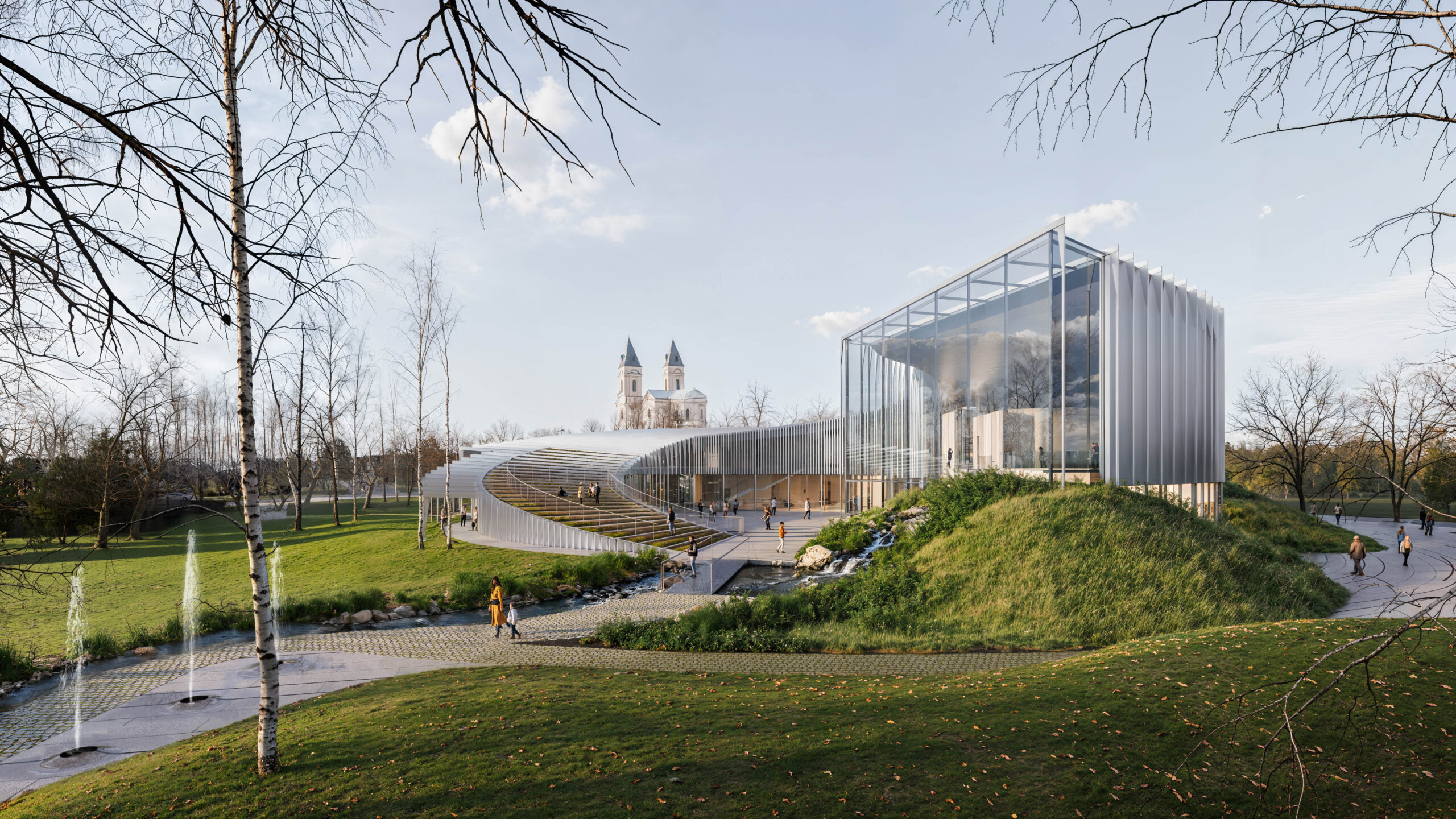
The spatial composition of the building is based on the principle of circular movement—an architectural counterpart of a water wheel, in which form becomes fluid rather than static. The volume rises from the terrain like a wave, while its center—the inner courtyard—remains a calm, contemplative space around which the entire narrative of discovery revolves.
The three-level system (the underground, ground, and first floors) forms a continuous vertical journey. The underground level is embedded into the mass of the hills, representing the depths of water—a realm of mystery and silence—connected to an inner outdoor water zone. The ground floor reveals the world of surface water, dominated by light, movement, and sound. The first floor ascends toward the sky, where the exhibition unfolds through installations of light and mist.
The volumetric design is laconic yet dynamic: horizontal façade louvers rhythmically wrap around the building in a circular motion, creating the impression of constant movement. Light falling on the surface of the louvers changes throughout the day—silvery and cool in the morning, turning golden-bronze in the evening. This transformation of light symbolizes the flow of time and the reflections of water, ensuring that the building is never the same, but continually changes with the rhythm of the day.
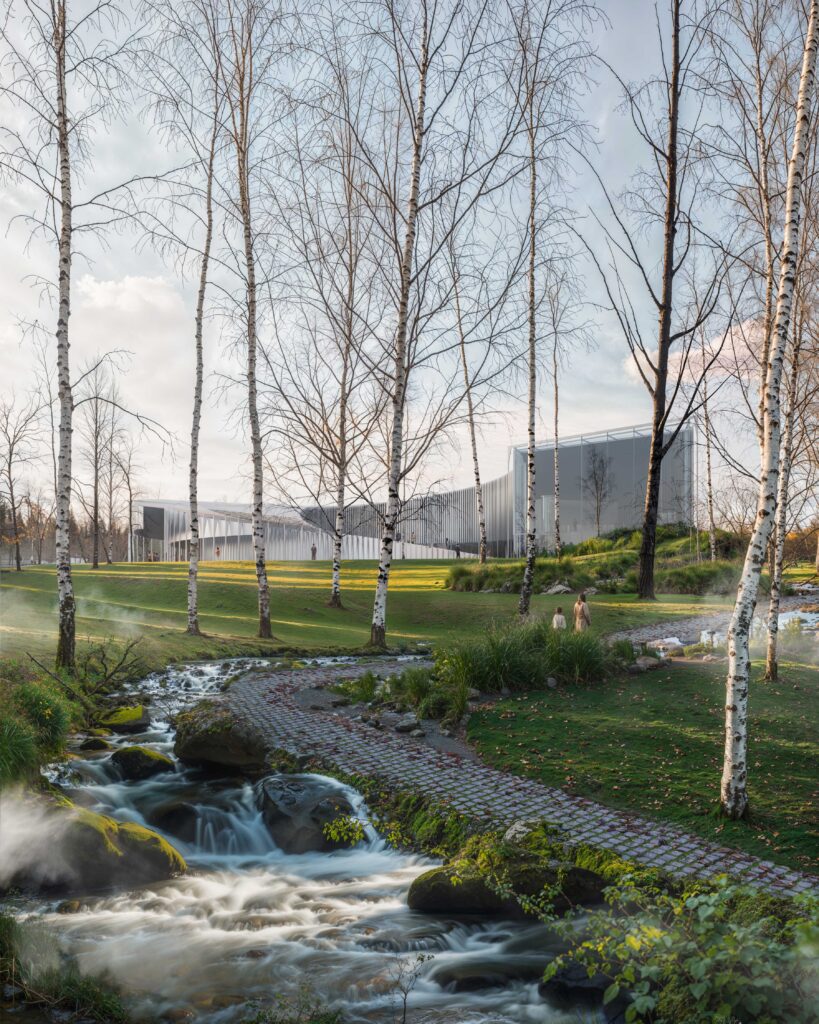
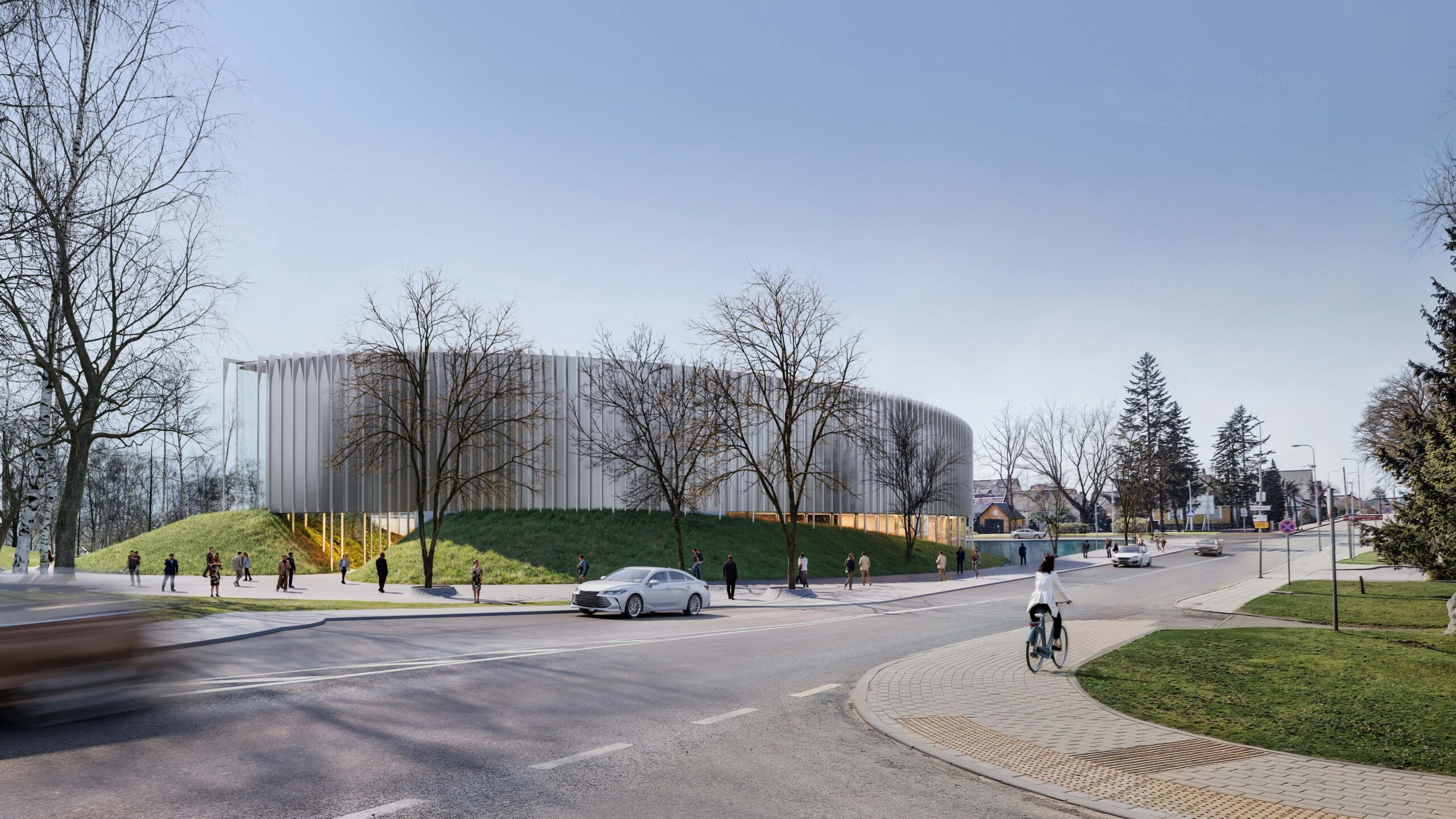
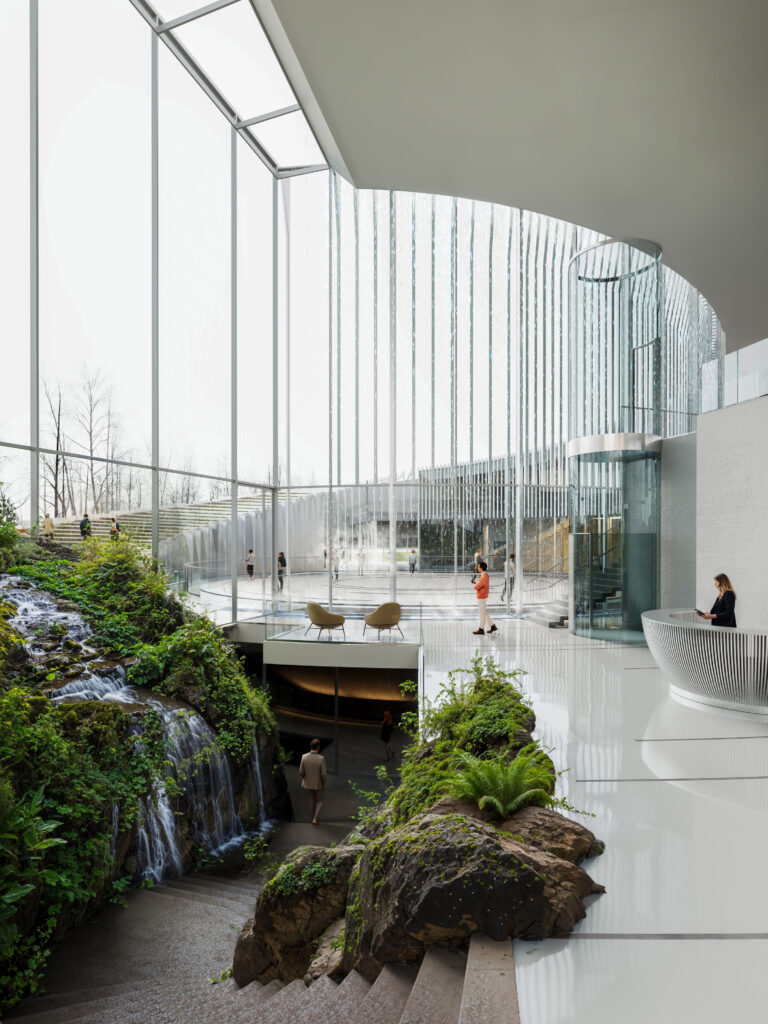
The Water Discovery Center The Circle is a sensory journey in which water becomes the guide. It leads visitors through three worlds—the silence of the underground, the movement of the surface, and the light of the sky—revealing the cycle of life from a single drop to a cloud.
The Underground World – The Beginning
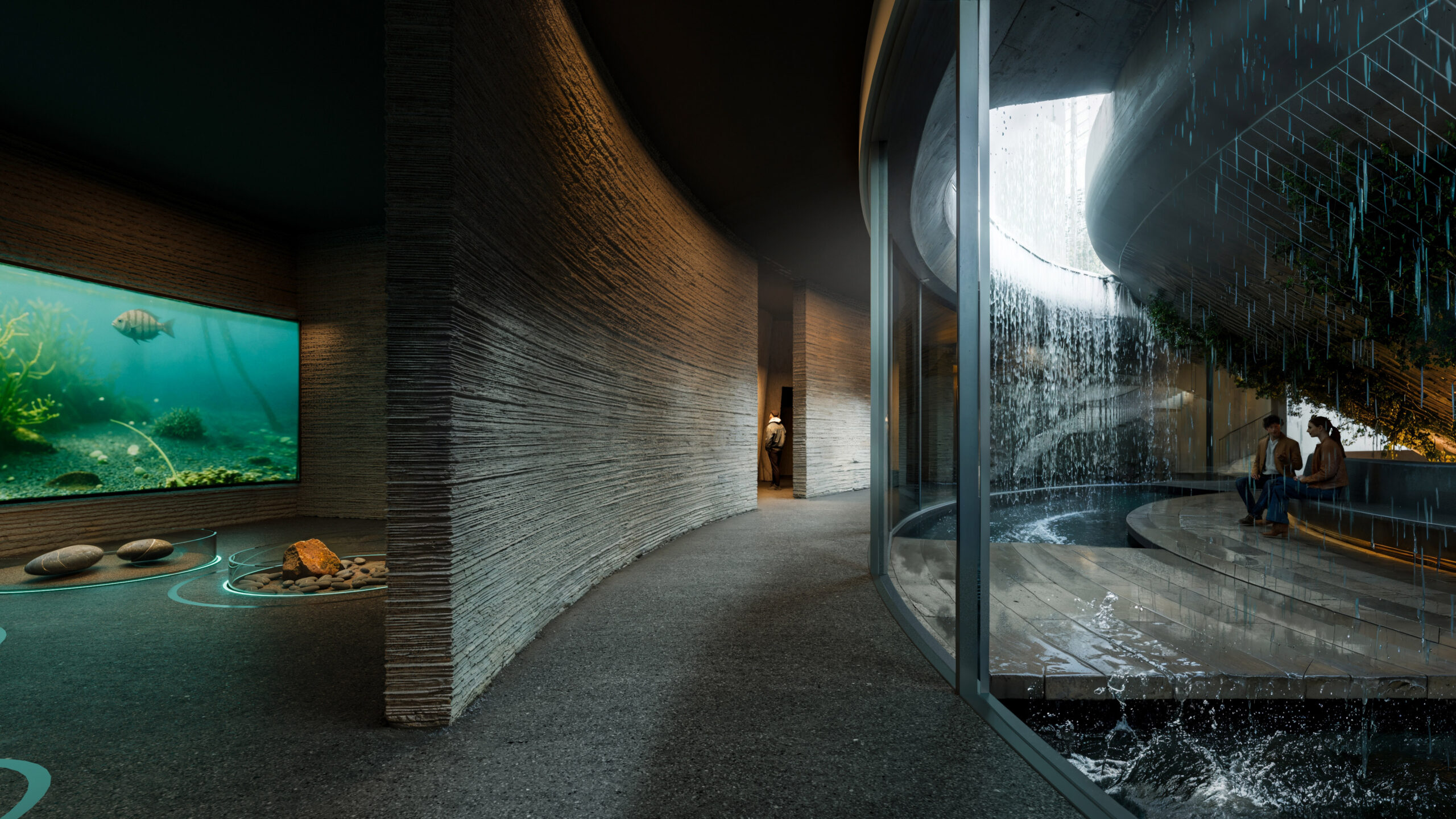
The journey begins at the underground level, where visitors descend into the realm of water’s origins. Darkness, rocky surfaces, reflections, and the slow sound of dripping drops create an atmosphere of birth and emergence. Interactive projections reveal the movement of underground streams, springs, and sources.
Here, visitors are met by interactive screens and motion sensors that allow them to explore the path of groundwater beneath the earth—from a drop to a spring. Water responds to human movement, creating the sensation that it is alive, sensitive, and attentive.
The Surface World – Movement and Discovery
As visitors ascend, the journey of water continues across the surface. The ground floor is dedicated to understanding water as movement, wave, and energy. Kinetic exhibitions invite visitors to physically engage with processes—from a raindrop to the flow of a river. Water becomes a creative medium: it can be controlled, shaped, slowed, and observed in motion.
Interactive tables and water laboratories enable hands-on experimentation—purifying water, observing evaporation, or altering temperature and pressure. Education unfolds through action: the visitor becomes a researcher. The exhibition scenario merges scientific curiosity with an aesthetic experience shaped by rhythm, light, sound, and movement.
Around the inner courtyard, a continuous exhibition circle is formed. Visitors are constantly aware of falling water—a living connection between all levels of the building. This vertical flow becomes the heart of the architecture, uniting different themes into a cohesive narrative of water.
The Sky World – Light and Transformation
On the second floor, water becomes light, vapor, and cloud. Here, the exhibitions transition into the realm of atmospheric phenomena—ice, snow, evaporation, and condensation. Visitors can control the direction of light, alter the color spectrum, and create rainbow effects.
Installations of light and shadow, together with rooms filled with vapor clouds, allow visitors to experience the states of water in transformation. Interactive sensors respond to movement: as a person walks, light follows their outline, as if emitted from water itself. This level also features the “Great Water Cycle Wheel”—a projection space that reveals the logic of the entire cycle, from evaporation to rainfall.